
Album Review: Ováte – Rúin
Reviewed by Rick Eaglestone
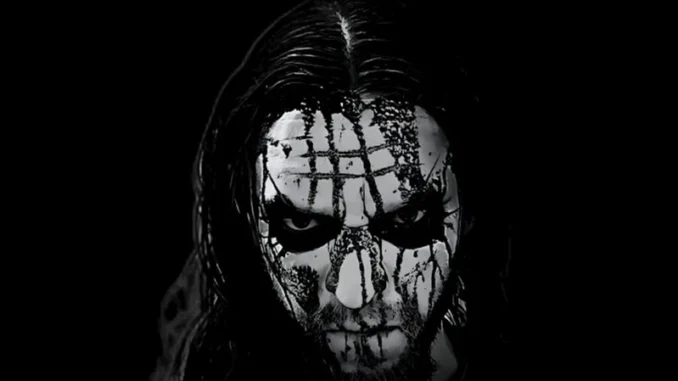
There is a certain kind of Norwegian black metal that never truly left Bergen, a cold, ritualistic strain that values atmosphere and conviction over polish, and it is from that soil that Ováte have finally crawled back into the light with their newest album Ruin.
Kutsumus opens proceedings, its Finnish title translating roughly as a summons or calling, and who better to answer it than Horna’s Spellgoth. The opening riffs cut like frost across bare skin, all tremolo menace and grim determination, while Brodd keeps things driving with a relentlessness that rarely lets up. Spellgoth’s rasping delivery is pure venom, dripping with the kind of raw Finnish hostility that has made Horna such a reliable force for decades. This does exactly what it needs to, setting the ceremonial tone and announcing that Ovate have not mellowed one bit in their absence.
Risset Testament sees Helheim’s H’grimmr step forward, and the shift in character is immediate. Where the opener snarled, this one feels more stately and more rooted in older, almost Viking-tinged traditions, the riffs carrying a weathered, epic gravitas that suits his voice perfectly. There is a real sense of something carved in stone here, a testament etched for those who come after, and Aindiachaí’s guitar work balances circling, trance-like riffs with just enough melodic movement to keep the listener locked in. It is the kind of track that rewards patience rather than demanding attention, and all the better for it. H’grimmr’s cleaner, more declamatory moments add a welcome sense of heritage, and it is a reminder of just how deep the roots of this scene really run.
Omveltning brings Cor Scorpii’s Thomas S. Ovstedal into the fold, and with him a slightly broader, more atmospheric palette. The song swells and churns rather than simply charging forward, its riffs rolling over each other like weather fronts colliding across a fjord. Ovstedal’s performance is commanding and theatrical without ever tipping into excess, and his presence lends this middle stretch a darker grandeur that stops the album from settling into a single gear. If there is a moment where Ruin shows its range most clearly, it is here. The way the song gradually tightens its grip, building tension without ever fully releasing it, is quietly masterful and one of the record’s real highlights.

Livsblot is easily the record’s most intriguing proposition, the title evoking the old Norse blot, a blood offering made to the gods, and it is the only track to share its vocal duties, with Gehenna’s Sanrabb joined by Odemark of The Last Eon and The Third Attempt. The interplay between the two voices gives the song a call-and-response quality that heightens its ritual feel, one throat leading the rite while the other answers from the shadows. Sanrabb, a Gehenna co-founder who has been a fixture of the scene since 1993, brings a grizzled authority that few could match. Musically it is the most overtly ritualistic piece here, the looping riffcraft the band clearly treasure pushed to its most trance-inducing extreme.
El Clam Del Foc sees Odemark return to take the lead alone. Having already shared the spotlight on the previous track, he makes the most of having the stage to himself, delivering a performance that feels feverish and possessed. The riffs here have a searing, almost incendiary quality, flickering between rigid, marching passages and sudden bursts of blast-driven fury, and the decision to give him a second outing feels entirely justified by the result. It is the album’s wildest moment, and arguably its most thrilling.
Slangen closes the album, and there could hardly be a more fitting voice to bring the curtain down than Taake’s Hoest, reuniting him with fellow Taake alumnus Brodd. The serpent of its title coils its way through some of the album’s most memorable riffs, mixing that distinctly Bergen blend of melody and malice with a swagger that only Hoest can really pull off. His snarling, unhinged delivery is instantly recognisable and gives the record a genuine sense of homecoming at its close. Hearing the two Taake alumni locked in together again is a thrill all its own. It is a strong ending, one that leaves you wanting to return to the beginning almost immediately.
Those after reinvention will not find it here, but for anyone who still holds the old Bergen flame close, this is a genuine treat. A cold, ritualistic and impressively cohesive return that turns a cast of underground icons into one unified voice of ruin.
For all the latest news, reviews, interviews across the heavy metal spectrum follow THE RAZORS’S EDGE on facebook, twitter and instagram.

Be the first to comment